Project Overview
Understanding tumor progression and immune response is complex due to dynamic biological interactions. This project models these interactions using mathematical systems to simulate tumor growth, immune activation, and suppression mechanisms.
The Problem
Tumor behavior depends on multiple interacting biological components such as immune cells, activation rates, and suppression mechanisms. These interactions are difficult to observe directly in real time, making modeling essential for understanding system dynamics.
Approach
- Built mathematical models using Ordinary Differential Equations (ODEs)
- Simulated tumor growth and immune response over time
- Integrated immune activation, suppression, and exhaustion mechanisms
- Tested system behavior under different biological parameters
Key Results
- Demonstrated tumor suppression driven by immune activity
- Showed how immune exhaustion leads to tumor regrowth
- Identified strong sensitivity to key parameters (activation & suppression rates)
- Highlighted importance of intervention timing
Simulation Results
Immune Boost Impact
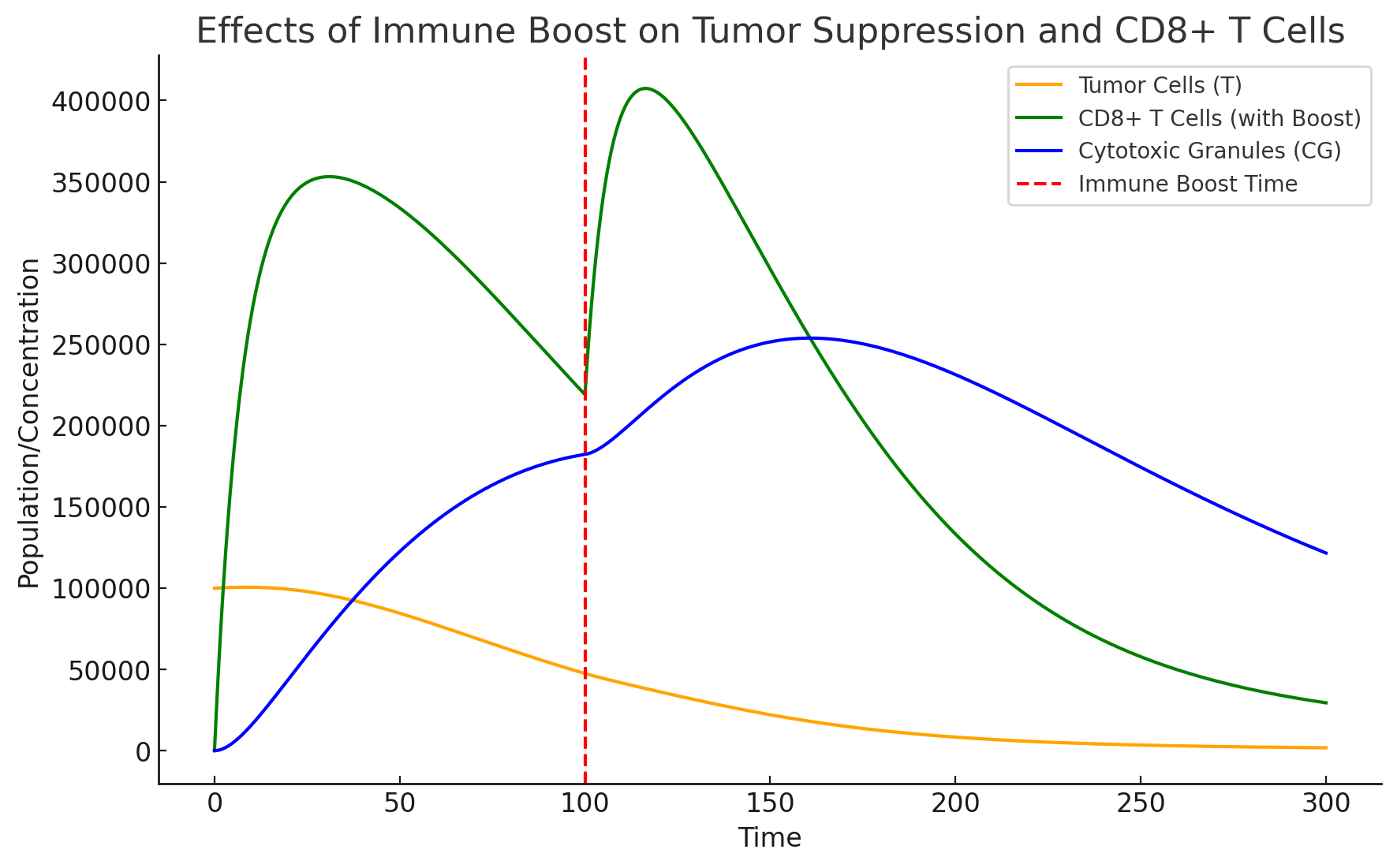
Introducing an immune boost leads to a rapid increase in CD8+ T cell activity and significantly accelerates tumor suppression, highlighting the importance of intervention timing in cancer treatment dynamics.
Parameter Sensitivity Analysis
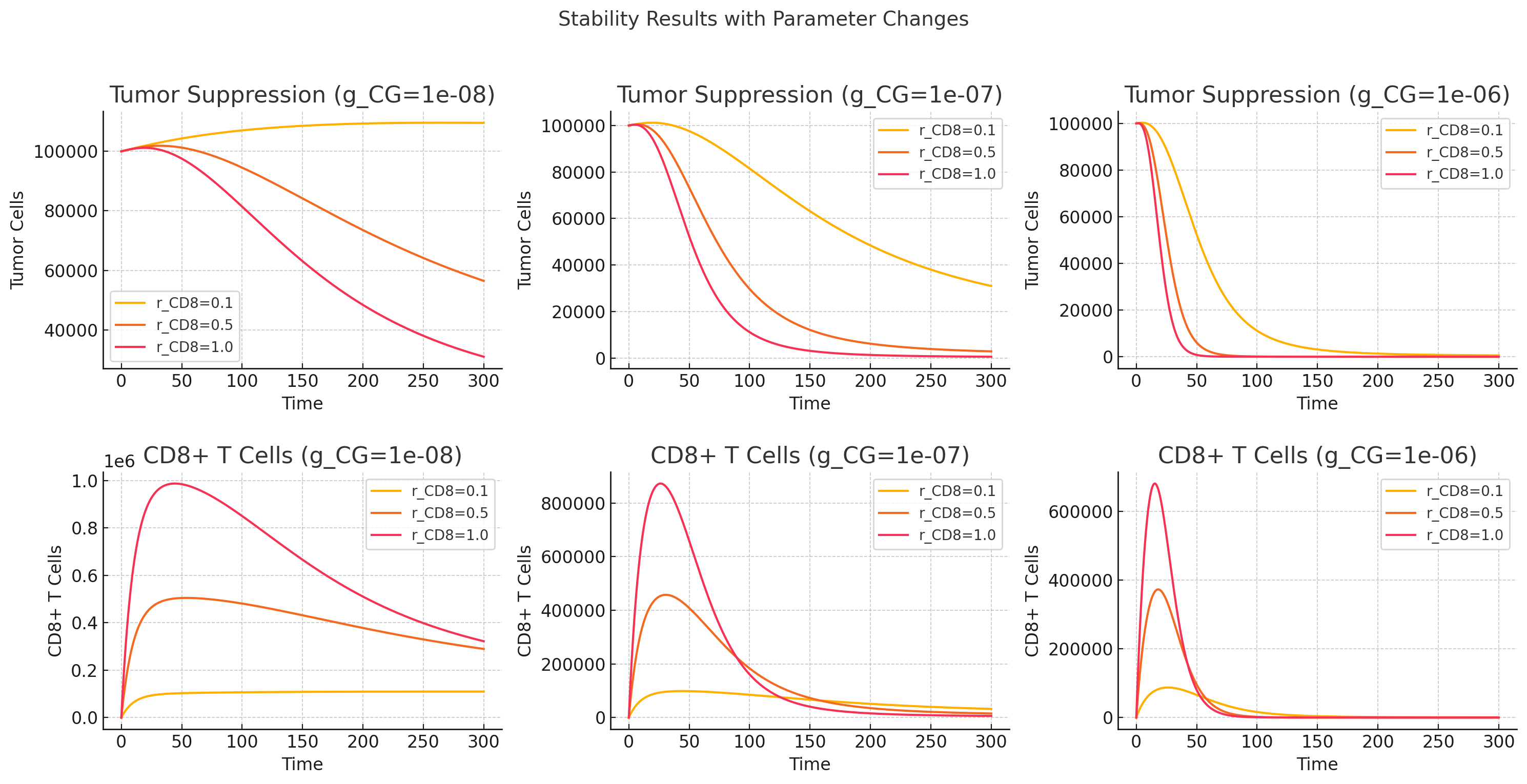
Model behavior is highly sensitive to key parameters such as CD8 activation and suppression rates, illustrating how immune response strength directly influences tumor control and system stability.
Challenges
- Simplifying complex biological systems into mathematical models
- Lack of real patient data for validation
- Balancing model realism and computational simplicity
Next Steps
- Integrate real biomedical datasets
- Extend model to spatial simulations (PDE / agent-based)
- Develop personalized modeling approaches (digital twin concept)